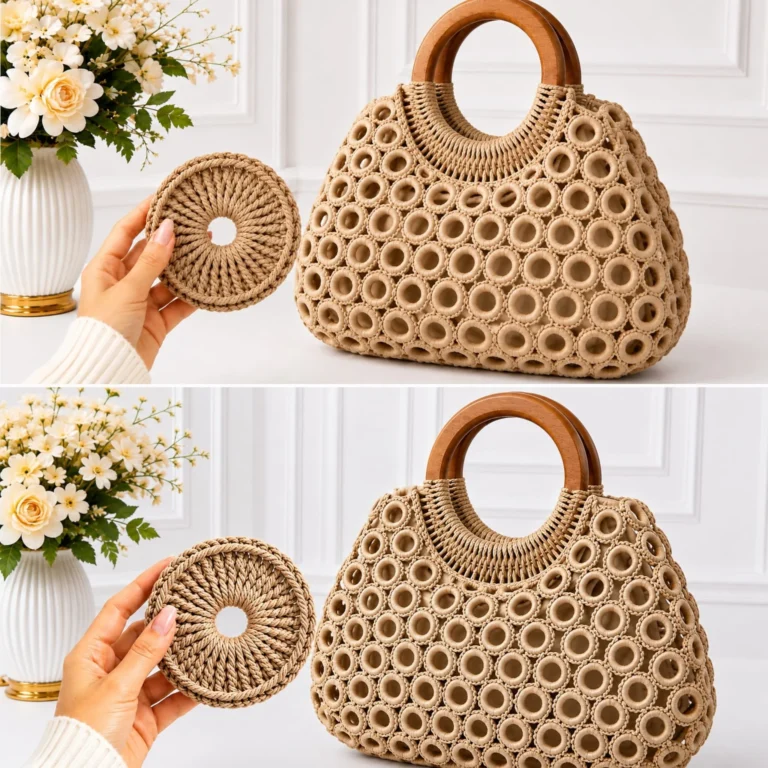

2 Crochet Floral Bracelet Ideas
Make two crochet floral bracelet ideas with original US-term instructions for tiny flowers, leaves, measured bands, closures and secure assembly. Each photo is paired with an original construction, materials, counted steps and finishing notes.
US crochet terms and working rules
ch = chain; sl st = slip stitch; sc = single crochet; hdc = half double crochet; dc = double crochet; inc = 2 stitches in one stitch; sc2tog = single crochet two stitches together; st(s) = stitch(es); sp = space; RS = right side. A magic ring is an adjustable yarn loop. Numbers in brackets give end-of-round or end-of-row counts. Repeat instructions between parentheses the stated number of times.
Unless a step explicitly says otherwise, beginning chains do not count as stitches. For dc rounds, ch 2 to reach height, then work the first dc into the first stitch; join to the first real dc. For sc rounds, ch 1 and join to the first sc. For flat sc rows, ch 1 and turn. Flat dc rows explicitly use ch 3 as the first counted dc. Do not work into joining slip stitches. Change color by completing the last yarn-over of the preceding stitch with the new yarn.
To work sc2tog: insert hook into the next stitch and draw up a loop, repeat in the following stitch, yarn over and draw through all three loops. For a surface slip stitch, bring the yarn up from behind the fabric, insert the hook into the next chosen gap and pull the new loop through the loop already on the hook. Keep these stitches loose.
US terms: inc = 2 stitches of the stated type in one stitch; sc2tog/dc2tog/dc3tog = work two or three stitches together as named; BLO = back loop only; FPdc = front-post double crochet; tr = treble crochet. Ch 3 counts as a dc unless stated otherwise; ch 1 for turning never counts. Joined rounds close with sl st unless continuous rounds are specified. The printed charts in some photographs are reference content, not instructions verified or transcribed here.
1. Delicate Botanical Flower Bracelet
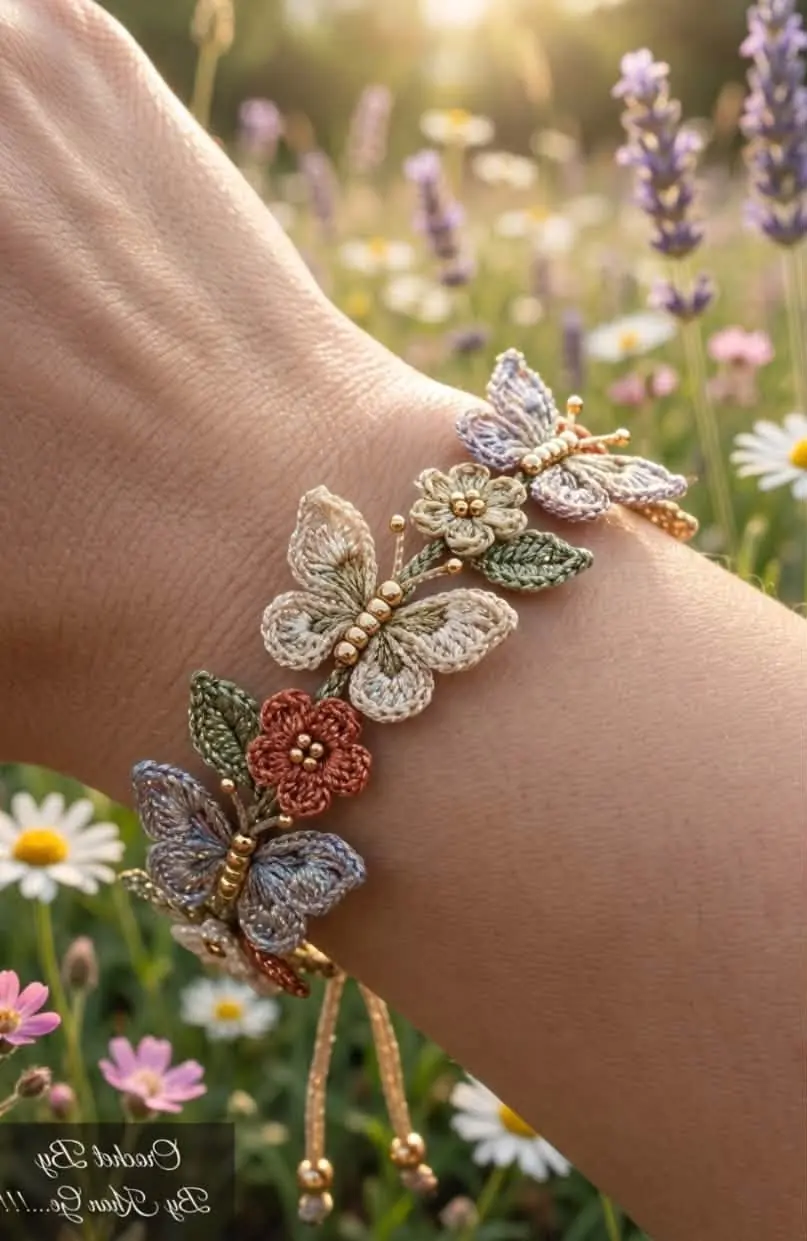
This delicate botanical flower bracelet highlights cream, beige, sage, rust and gray. The written version explains a complete original construction while simplifying details that cannot be recovered reliably from the photograph.
Materials, gauge and size
Fine crochet cotton, approximately 10–25 g per bracelet plus colored scraps. Colors: cream, beige, sage, rust and gray. Hook: 1.5–2 mm. Quantities are estimates; weigh a sample and add 15–20% for assembly, edging and adjustments.
Also use a yarn needle, scissors, markers, measuring tape and blocking pins. Add small buttons and fine sewing thread.
Gauge and size: Example band gauge is 30 sc per 10 cm. Fit to the measured wrist and allow for the button-and-loop closure.
Measured bracelet base
- Use fine cotton and a 1.5–2 mm hook. Wash a sample first. Ch 49; Row 1 sc in second chain and across [48]. Rows 2–3: sc across [48]. At 30 sc per 10 cm, the band is 16 cm long. Choose your own stitch count from wrist circumference minus about 1 cm, then add one chain; the closure supplies the remaining ease.
- At one end ch 6 and sl st into the opposite corner of that short end. Work 6 sc around the loop and fasten off. Sew a small button to the other short end, checking the opening before closing all thread ends. Optional fabric backing can be sewn to the underside after adding flowers.
- With the center color work 10 sc into a magic ring; join [10]. With the petal color repeat (sl st in next sc, 5 dc in next sc) five times. [Five petals] Fasten off with a sewing tail; weave or sew both ends securely.
Tiny leaf
- Ch 7. Starting in second chain, work sc, hdc, 2 dc, hdc, then 3 sc in the last chain. Working along the underside, hdc, 2 dc, hdc, sc [13 stitches]. Sl st to the beginning and fasten off. Make the number specified in the project, leaving sewing tails.
Botanical bracelet assembly
- Make five tiny flowers: two cream, one rust, one taupe and one gray. Make eight sage leaves. Arrange flowers in a shallow line along the center 12 cm of the band, with leaves in alternating directions beside each gap. Sew centers and two petal tips of each flower and both ends of each leaf.
- For a finer scale than the 48-stitch base, change to thread and a smaller hook rather than assuming the same finished length. Measure again after blocking. Embroider gold center knots; do not rely on glued beads or flower joins.
Assembly and finishing
- Check all counts before joining. Weave ends through several stitches in three directions. Sew point joins more than once and distribute tension evenly.
- Wash a sample using the yarn care instructions, block gently and allow it to dry completely. Recheck fit or motif size after washing. These original patterns are photo-inspired and physically untested; they do not reproduce a verified photographed chart.
2. Colorful Daisy Bracelet Collection
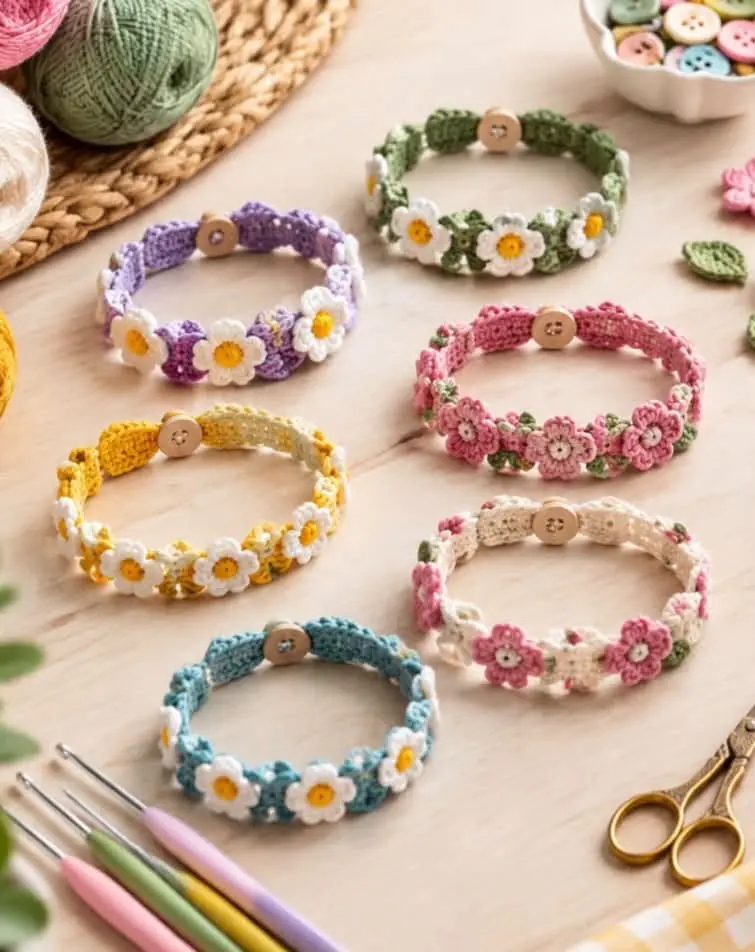
This colorful daisy bracelet collection highlights pink, lilac, mustard, ivory, teal and green. The written version explains a complete original construction while simplifying details that cannot be recovered reliably from the photograph.
Materials, gauge and size
Fine crochet cotton, approximately 10–25 g per bracelet plus colored scraps. Colors: pink, lilac, mustard, ivory, teal and green. Hook: 1.5–2 mm. Quantities are estimates; weigh a sample and add 15–20% for assembly, edging and adjustments.
Also use a yarn needle, scissors, markers, measuring tape and blocking pins. Add small buttons and fine sewing thread.
Gauge and size: Example band gauge is 30 sc per 10 cm. Fit to the measured wrist and allow for the button-and-loop closure.
Measured bracelet base
- Use fine cotton and a 1.5–2 mm hook. Wash a sample first. Ch 49; Row 1 sc in second chain and across [48]. Rows 2–3: sc across [48]. At 30 sc per 10 cm, the band is 16 cm long. Choose your own stitch count from wrist circumference minus about 1 cm, then add one chain; the closure supplies the remaining ease.
- At one end ch 6 and sl st into the opposite corner of that short end. Work 6 sc around the loop and fasten off. Sew a small button to the other short end, checking the opening before closing all thread ends. Optional fabric backing can be sewn to the underside after adding flowers.
- With the center color work 10 sc into a magic ring; join [10]. With the petal color repeat (sl st in next sc, 5 dc in next sc) five times. [Five petals] Fasten off with a sewing tail; weave or sew both ends securely.
Tiny leaf
- Ch 7. Starting in second chain, work sc, hdc, 2 dc, hdc, then 3 sc in the last chain. Working along the underside, hdc, 2 dc, hdc, sc [13 stitches]. Sl st to the beginning and fasten off. Make the number specified in the project, leaving sewing tails.
Eight daisy bracelet colorways
- Make eight bands in cream, lilac, pink, mustard, sage, teal, pale yellow and ivory. For each, make seven small five-petal flowers with contrasting centers and fourteen tiny leaves [56 flowers and 112 leaves for all eight].
- Space seven flower centers evenly along each band, keeping the loop and button clear. Sew two leaves beside every flower, then secure every center and petal tip that would otherwise lift. Alternate white petals with the band’s main color for two-tone versions. Fine sewing thread gives a less bulky join.
Assembly and finishing
- Check all counts before joining. Weave ends through several stitches in three directions. Sew point joins more than once and distribute tension evenly.
- Wash a sample using the yarn care instructions, block gently and allow it to dry completely. Recheck fit or motif size after washing. These original patterns are photo-inspired and physically untested; they do not reproduce a verified photographed chart.